
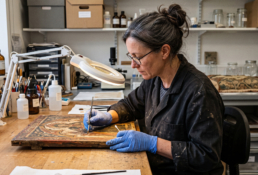
Tear Repair & Mending Historic Documents with Japanese Washi Paper
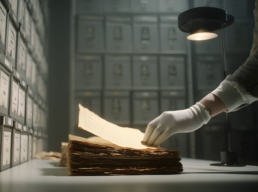
Historic documents connect us to the people, events, and ideas that shaped our past. Whether preserved in museums, libraries, archives, government collections, or private family records, these irreplaceable materials require thoughtful care when damaged.
One of the most common conservation treatments is the repair of tears and weakened areas using carefully selected Japanese Washi papers. For generations, conservators have relied on Washi because of its exceptional strength, flexibility, and long-term stability, allowing repairs that support fragile documents while respecting their historical integrity.
Why Historic Documents Tear
Paper naturally becomes more vulnerable over time. Exposure to light, fluctuations in humidity, handling, acidic paper, poor storage conditions, and previous repairs can weaken fibers, making documents susceptible to tearing.
Common damage includes:
- Edge tears
- Fold separations
- Cracks along creases
- Losses at corners
- Weak or brittle paper
- Detached fragments
Without proper stabilization, even minor tears can continue to grow with handling.
Why Japanese Washi Is Used for Tear Repair
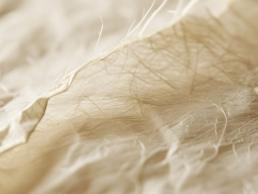
Professional conservators choose Japanese Washi because its long natural fibers create a repair material that is both incredibly strong and exceptionally lightweight.
Unlike many commercial repair papers, Washi can provide structural reinforcement without adding unnecessary bulk or obscuring the original document.
Many conservation-grade Washi papers offer:
- Long fiber strength
- Flexibility
- Minimal visual impact
- Excellent aging characteristics
- Acid-free and pH neutral composition
- Compatibility with reversible conservation adhesives
These qualities allow repairs to support the original artifact while remaining sympathetic to its structure and appearance.
Choosing the Appropriate Washi Paper
No single Washi paper is appropriate for every repair. Conservators evaluate several factors before selecting a paper, including:
- Thickness
- Fiber composition
- Color
- Transparency
- Surface texture
- Fiber direction
- Strength requirements
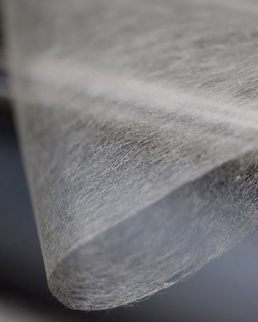
Ultra-thin papers such as Tengujo may be selected for delicate manuscripts, while slightly heavier Kozo papers may provide additional support for larger or more damaged documents.
The objective is always to use the lightest paper capable of providing the necessary reinforcement.

The Importance of Reversible Repairs
One of the guiding principles of modern conservation is reversibility. Whenever possible, treatments should be capable of being removed in the future without damaging the original object.
Japanese Washi works exceptionally well with traditional conservation adhesives such as wheat starch paste because these materials allow repairs to remain stable while preserving future treatment options if conservation methods evolve.
More Than Strength
Successful tear repair is not simply about making a tear disappear. The repair should:
- Stabilize the document
- Preserve flexibility
- Minimize visual distraction
- Respect original materials
- Avoid introducing harmful chemicals
- Support long-term preservation
A carefully executed repair should become part of the document’s preservation rather than altering its historical character.

Applications Beyond Historic Documents
The same Washi papers used for document repair are also widely used for:
- Historic maps
- Rare books
- Manuscripts
- Prints and drawings
- Architectural drawings
- Certificates and diplomas
- Family records
- Genealogical materials
- Works of art on paper
Their versatility has made Japanese Washi a trusted material throughout the conservation profession.
Why Conservators Trust Japanese Washi
For centuries, Japanese papermakers have refined techniques that produce papers of remarkable quality and consistency. Today, those same traditional materials continue to play an essential role in preserving cultural heritage around the world.
By combining exceptional fiber strength with flexibility, archival stability, and natural beauty, Japanese Washi remains one of the most trusted materials available for the conservation of historic paper collections.
Find the Right Washi for Your Conservation Project
Edofiber offers a carefully selected range of traditional Japanese Washi papers suitable for professional conservation, archival preservation, and paper restoration. Whether repairing historic documents, rare books, maps, or works of art on paper, we can help you identify papers appropriate for your specific conservation needs.
Contact Edofiber to learn more about available papers, specifications, and sampling options.