

Hinging and Mounting Works on Paper with Japanese Washi
Why Conservators Choose Washi for Museum-Quality Mounting
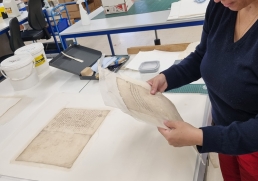
When displaying or storing works on paper, conservators face a unique challenge: how to secure an artwork without causing damage. Whether mounting a historic document, fine art print, map, manuscript, or archival photograph, the goal is always the same: provide support while preserving the object’s integrity and allowing for future treatment if needed.
For decades, professional conservators have relied on handmade Japanese washi papers as a preferred material for hinging and mounting delicate works on paper. Washi’s exceptional strength, flexibility, and reversibility make it an ideal choice for conservation applications where both stability and preservation are essential.
What Is Conservation Hinging?
A hinge is a small strip of paper used to attach an artwork to a backing board or mat. Unlike permanent adhesives, conservation hinges are designed to support the artwork while allowing it to move naturally in response to environmental changes such as fluctuations in temperature and humidity.
The primary purpose of a hinge is to hold the artwork securely without placing stress on the paper itself. Properly constructed hinges help prevent warping, buckling, and tearing while ensuring that the artwork can be safely removed in the future if conservation treatment becomes necessary.
This principle of reversibility is a cornerstone of modern conservation practice.


Why Japanese Washi Is Ideal for Hinging
Japanese washi is made from long plant fibers, most commonly kozo, mitsumata, or gampi. These fibers create papers that are remarkably strong despite being extremely thin and lightweight.
For conservation hinges, these qualities provide several advantages:
Exceptional Strength
The long fibers found in handmade Japanese papers create a strong yet flexible hinge that can support the weight of an artwork without adding bulk.
Minimal Visual Impact
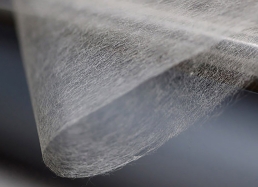
Ultra-thin tissues such as tengujo and lightweight kozo papers are nearly invisible when properly applied. This allows conservators to create secure mounts without distracting from the artwork itself.
Flexibility
Unlike many machine-made papers, washi remains flexible over time. This flexibility helps absorb minor movement and reduces stress on the object being mounted.
Reversibility
When used with traditional conservation adhesives such as wheat starch paste, washi hinges can be safely removed in the future with minimal risk to the original artwork.
Common Types of Washi Used for Hinging
Different projects require different papers depending on the size, weight, and condition of the object being mounted.
Tengujo
Tengujo is one of the lightest Japanese papers available and is often used for delicate works on paper. Its thin profile makes it especially suitable for conservation hinges where minimal visibility is desired.
Lightweight Kozo Papers
Kozo papers offer greater strength while maintaining flexibility. Conservators frequently choose lightweight kozo papers for larger prints, maps, and documents that require additional support.
Mitsumata Papers
Mitsumata papers are valued for their smooth surface and refined appearance. They may be selected when a softer texture or greater visual integration is important.


The Role of Wheat Starch Paste
The effectiveness of a conservation hinge depends not only on the paper but also on the adhesive.
Wheat starch paste has been used in conservation for generations because it is stable, reversible, and compatible with paper-based materials. When paired with Japanese washi, it creates a strong bond that can later be reversed if necessary.
Unlike pressure-sensitive tapes and many commercial adhesives, wheat starch paste does not introduce harmful chemicals or irreversible changes to the artwork.
Why Conservators Avoid Tape
One of the most common problems encountered during conservation treatment is damage caused by pressure-sensitive tapes.
Over time, tapes can:
- Yellow and discolor paper
- Leave adhesive residues
- Become brittle and difficult to remove
- Cause staining that migrates into the paper fibers
- Tear original material during removal
For these reasons, professional conservators generally avoid using tape for mounting historic or valuable works on paper.
Japanese washi hinges provide a safer and more conservation-friendly alternative.
Museum and Archive Applications
Japanese paper hinges are widely used in:
- Museums
- University collections
- Libraries
- Archives
- Special collections departments
- Private conservation studios
Applications include:
- Fine art prints
- Historic maps
- Architectural drawings
- Manuscripts
- Letters and documents
- Watercolors
- Photographs
- Rare books and ephemera
Because the materials are both durable and reversible, they support long-term preservation goals while allowing future generations to access and study the object.

Selecting the Right Washi for Your Project
There is no single paper that works for every conservation treatment. Factors such as paper weight, transparency, fiber composition, and the condition of the object all influence the choice of material.
Conservators often select ultra-thin tissues for lightweight or fragile works, while stronger kozo papers may be preferred for larger or heavier objects that require additional support.
Understanding these differences helps ensure that the hinge performs its intended function while remaining visually unobtrusive and fully reversible.
The Conservation Standard
In professional conservation, every treatment decision is guided by the principles of preservation, compatibility, and reversibility. Japanese washi continues to be one of the most trusted materials for hinging and mounting because it supports all three.
Its unique combination of strength, flexibility, and archival stability allows conservators to safely display and store valuable works on paper while protecting them for future generations.
Whether used in a museum, archive, university collection, or private conservation practice, Japanese washi remains an essential tool in the preservation of cultural heritage.
Explore Washi Applications
To see how Washi is used today, explore: