
Sourcing Conservation Washi Directly from Japan: Connecting Conservators with Japan’s Finest Papermakers
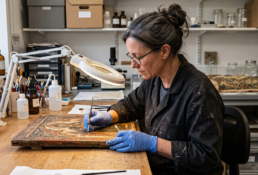
For museums, archives, libraries, and professional conservators, finding the right Japanese Washi paper can be essential to successful preservation and restoration. Yet sourcing specialized conservation papers directly from Japan can be challenging, particularly when specific fiber compositions, weights, or production quantities are required.
Edofiber offers a direct connection to Japan’s traditional papermaking industry, helping conservation professionals obtain high-quality Washi through established relationships with specialized manufacturers across the country.
As part of Nagai Shigyo Corporation, a Japanese paper company established in 1928, Edofiber draws on nearly 100 years of industry experience to connect international customers with some of Japan’s most respected Washi producers.
Nearly a Century of Japanese Papermaking Expertise
Edofiber’s sourcing capabilities are rooted in the history and relationships of its parent company, Nagai Shigyo Corporation.
Since 1928, Nagai Shigyo has worked within Japan’s paper industry, developing extensive knowledge of traditional Washi production, specialty materials, and the manufacturers responsible for producing them.
Over generations, these relationships have created opportunities to work with specialized papermakers throughout Japan, including smaller factories and traditional workshops that may not sell directly to international customers.
This access is one of Edofiber’s greatest advantages
Rather than limiting customers to a fixed catalog of available papers, Edofiber can work with its Japanese manufacturing network to identify and source Washi suited to particular conservation applications.
For international institutions and commercial buyers, this means access to specialized materials supported by direct communication with experienced Japanese paper manufacturers.
Echizen Washi: Fukui Prefecture
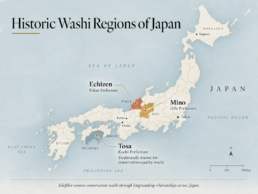
Located along the northwestern side of central Honshu, Echizen is one of Japan’s oldest and most respected papermaking regions, with traditions extending back approximately 1,500 years.
Echizen Washi is known for its exceptional craftsmanship and diverse paper varieties. Regional producers manufacture papers suitable for fine art, printmaking, bookbinding, and conservation applications.
Its longstanding expertise in fiber processing and traditional papermaking makes Echizen an important sourcing region for specialized Japanese papers.
Mino Washi: Gifu Prefecture
In the mountainous region of central Japan, Mino has produced traditional Japanese papers for more than 1,300 years.
Mino Washi is celebrated for combining delicacy with strength. Its fine, evenly distributed fibers create lightweight papers with excellent flexibility and durability.
These qualities make certain Mino papers particularly valuable for applications requiring thin, strong, and visually unobtrusive materials, including specialized conservation treatments.
Exploring Japan’s Historic Washi-Producing Regions
Japan has a rich history of papermaking, with different regions developing distinctive techniques, materials, and production specialties. Three of the most historically significant areas are Echizen, Mino, and Tosa.
Tosa Washi: Kochi Prefecture
Located on the island of Shikoku in southern Japan, Tosa is particularly significant to the conservation and restoration community.
Tosa is one of Japan’s most important regions for conservation-quality Washi, renowned for producing exceptionally thin yet strong papers used in the preservation of historic documents, artworks, manuscripts, and other cultural materials.
Among its best-known papers is Tosa Tengujō, an ultra-thin Washi made from long Kozo fibers. Despite its remarkable thinness and transparency, Tengujō offers exceptional strength and flexibility.
These characteristics make it especially useful for delicate paper repairs, reinforcement, and stabilization, where conservators must minimize the visual and physical impact of treatment.
Through its Japanese manufacturing relationships, Edofiber helps connect professional buyers with conservation Washi associated with these historic papermaking traditions.
Access to Specialized Washi Factories Beyond Traditional Distribution Channels
Not every Japanese Washi manufacturer has the infrastructure or resources to distribute internationally.
Some of Japan’s most specialized paper producers are smaller workshops with generations of expertise. Their papers may be difficult to obtain through conventional distributors, and certain grades or specifications may not be widely advertised outside Japan.
Edofiber helps bridge that gap.
Through Nagai Shigyo’s established network, Edofiber can communicate with manufacturers, investigate specialized paper requirements, coordinate production, and facilitate international sourcing.
For conservators and institutional buyers, these capabilities may provide access to materials that would otherwise be difficult to locate or purchase.
Whether a project calls for ultra-thin Tengujō, a particular weight of Kozo paper, or Washi with specific fiber characteristics, Edofiber can help explore available sourcing and production options.
Looking for a specific conservation Washi that you cannot find through your usual supplier? Edofiber is capable of sourcing directly from Japan.
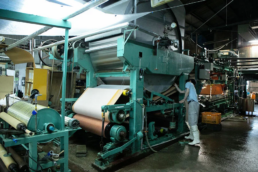
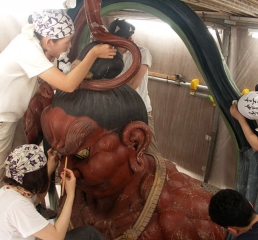
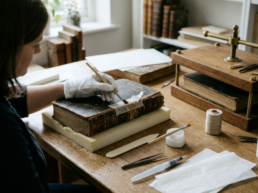
Conservation Washi for Museums, Archives, Libraries, and Institutional Buyers
Edofiber specializes in supplying Washi for professional, commercial, and institutional applications.
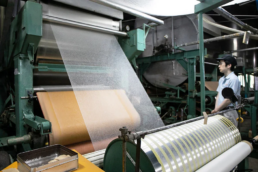
While many conventional paper suppliers focus on small retail orders, Edofiber’s sourcing and manufacturing capabilities are designed to support larger-volume requirements, including custom paper production.
Typical production inquiries begin at:
- 100 meters or more for roll orders, 1m wide
- 1,000 sheets or more for sheet orders, customizable in size
These quantities are particularly relevant for museums, archives, university conservation departments, institutional purchasing programs, specialized distributors, and commercial conservation suppliers.
For organizations with ongoing preservation needs, Edofiber can help coordinate paper specifications and production quantities with Japanese manufacturers.
Custom sourcing may include requests involving paper weight, fiber composition, dimensions, color, and other material characteristics, depending on the manufacturer and production requirements.
Because many papers are sourced or produced to order, customers are encouraged to share their project specifications and anticipated quantities when requesting a quotation.
Explore Our Conservation Washi Selection
The most appropriate Washi paper depends on the object being treated, the conservation technique, and the material characteristics required.
Conservators may need to evaluate factors such as:
- Fiber composition, including Kozo, Mitsumata, or Gampi
- Paper weight and thickness
- Transparency and visual compatibility
- Tensile strength and flexibility
- Surface texture and fiber distribution
- Sheet dimensions, roll formats, and purchasing quantities
Selecting a paper for conservation requires careful consideration of the original material and the intended treatment.
Edofiber offers a carefully developed selection of conservation Washi papers designed to meet the needs of professional conservators, museums, archives, and restoration specialists. Developed through years of collaboration with a French conservation customer, these papers reflect extensive research, testing, and refinement to address a wide range of conservation applications.
We encourage customers to begin by exploring our existing conservation Washi selection, which includes a variety of paper weights, fiber compositions, and characteristics suited to most common conservation needs. These established papers offer a more straightforward ordering process while benefiting from years of specialized development and practical experience.
If your project requires a specific fiber composition or paper specification not represented in our current selection, Edofiber can explore additional sourcing possibilities through our established network of Japanese Washi manufacturers.
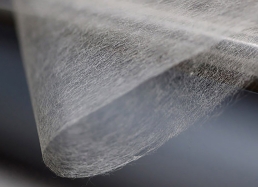
Ask about special introductory pricing of up to 30% on qualifying first orders from the papers listed below.
- 100 meters or more for roll orders, 1m wide
- 1,000 sheets or more for sheet orders, customizable in size
Note: Customized paper production is available from 3.0 gr /㎡or 0.1 oz/sqft in any color and fiber combination.
| SKU | Paper | Country Produced | Weight (gr / ㎡ or oz/sqft) | Component | Length of Fibers | Color Dyed |
|---|---|---|---|---|---|---|
| RL1 | Kozo 3.5gr Cream | Japan | 3.5/0.12 | Japanese Kozo 100%, Accopearl R200 Mucilage Glue | 13 mm/0.5 in | Cream |
| RL2 | Kozo 3.5gr Natural | Japan | 3.5/0.12 | Japanese Kozo 100%, Accopearl R200 Mucilage Glue | 13 mm/0.5 in | Light Beige |
| RL3 | Kozo 5gr Natural | Japan | 5.0/0.18 | Japanese Kozo 100%, Accopearl R200 Mucilage Glue | 13 mm/0.5 in | Light Beige |
| RL4 | Jun kozo 6gr Brown | Japan | 6.0/0.21 | Japanese Kozo 100%, Accopearl R200 Mucilage Glue | 13 mm/0.5 in | Brown |
| RL5 | Kozo 6gr Cream | Japan | 6.0/0.21 | Thai Kozo 100%, Accopearl R200 Mucilage Glue | 9.5 mm/0.37 in | Cream |
| RL6 | Manilla 6gr Natural | Japan | 6.0/0.21 | Manila 100%, Accopearl R200 Mucilage Glue | 5 mm/0.2 in | Non |
| RL7 | Tarentula Manilla 9 gr | Japan | 9.0/0.32 | Tarentula Manilla 100%, Accopearl R200 Mucilage Glue | 4 mm/0.16 in | Natural |
| RL8 | Nao paper 20 gr | Japan | 20.0/0.7 | Japanese Kozo 100%, Accopearl R200 Mucilage Glue | 13 mm/0.5 in | Light Beige |
| RL9 | Washi 45gr | Japan | 45.0/1.59 | Thai Kozo 90 %, Pulp 10 %, Accopearl R200 Mucilage Glue | 9.5 mm/0.37 in | Light Beige |
| RL10 | Takogami 65 gr | Japan | 65.0/2.29 | Japanese Kozo 100%, Accopearl R200 Mucilage Glue | 13 mm/0.5 in | Beige |
| RL11 | Mitsumata 11 gr | Japan | 11.0/0.39 | Japanese Mitsumata 100%, Accopearl R200 Mucilage Glue | 8 mm/0.3 in | Light Beige |
| RL12 | Minogami Usukuchi 19 gr | Japan | 19.0/0.67 | Japanese Kozo 100%, Accopearl R200 Mucilage Glue | 13 mm/0.5 in | Natural |
| RL13 | Shibori 29 gr | Japan | 29.0/1.0 | Thai Kozo 100%, Accopearl R200 Mucilage Glue | 9.5 mm/0.37 in | Beige |
| RL14 | Hosokawa 39 gr | Japan | 39.0/1.38 | Thai Kozo 80%, Pulp 20 %, Accopearl R200 Mucilage Glue | 9.5 mm/0.37 in | Light Beige |
| RL15 | Takogami 43 gr | Japan | 43.0/1.5 | Japanese Kozo 100%, Accopearl R200 Mucilage Glue | 13 mm/0.5 in | Beige |
| RL16 | Kozo 8 gr Natural | Japan | 8.0/0.3 | Japanese Kozo 100%, Accopearl R200 Mucilage Glue | 13 mm/0.5 in | Natural |
| RL16 | Shibori 29 gr Green | Japan | 29.0/1.0 | Thai Kozo 100%, Accopearl R200 Mucilage Glue | 9.5 mm/0.37 in | Light Green |
Find the Right Conservation Washi for Your Project
Need something not listed? If your project requires a specific fiber composition or paper characteristic not available in our current selection, contact us to discuss additional sourcing possibilities through our Japanese manufacturing network.
First-Time Buyer Special: Save Up to 30%
Ask about special introductory pricing of up to 30% on qualifying first orders from our current selection. Eligibility and final pricing are confirmed during the quotation process.
Explore Edofiber’s established selection of conservation Washi papers, developed through years of collaboration with conservation professionals to meet a wide range of restoration and preservation needs. We encourage you to start with our existing paper selection, available for institutional and commercial orders.